Providing Home Care in Metro Atlanta and Surrounding Areas
Why Proactive Predictive Care Will Change the Way You Prevent Falls in Atlanta

For many families in Metro Atlanta, the call comes in the middle of the night. A slip in the bathroom, a trip over a rug, or a missed step on the stairs: and suddenly, a parent’s independence is at stake. Traditionally, home care has been reactive: we wait for an incident to occur and then scramble to adjust.
But in 2026, the landscape of senior safety is shifting. At Elevare Home Care, LLC, we believe that the best fall is the one that never happens. By moving from a reactive model to proactive predictive care, we are helping Atlanta seniors stay in their homes longer, with more confidence and less risk.
In this guide, we’ll explore how predictive care works, why it is the most effective way to prevent falls, and how our specialized approach is setting a new standard for home care in Georgia.
The Shift from Reactive to Predictive Care
Most fall prevention strategies are built on hindsight. After a senior falls, a family might install grab bars or remove a stray rug. This is reactive care. While necessary, it doesn’t address the subtle changes that happen before the fall.
Predictive care is different. It uses a combination of caregiver vigilance, home assessments, and modern monitoring technology to identify risk patterns before they lead to an emergency. This includes observing changes in gait, monitoring "near-misses," and anticipating how health conditions: like Parkinson's or dementia: might affect balance.
Why Proactive Care is Essential for Atlanta Seniors
Atlanta is a city of diverse homes, from the historic multi-story houses in Buckhead to the ranch-style homes in Sandy Springs. Each environment presents unique challenges. By being proactive, we can:
- Identify environmental hazards before they cause a trip.
- Recognize medication side effects like dizziness or low blood pressure early.
- Improve physical confidence through consistent, supervised movement.
1. The Foundation: Safe Aging in Place Assessments
Preventing falls begins with understanding the environment. Our Safe Aging in Place Assessment is more than just a checklist; it’s a comprehensive review of the "flow" of a senior’s life.

We look for the "invisible" risks that standard checks might miss:
- Lighting Transitions: Does the hallway stay dark for too long when walking from the bedroom to the bathroom at night?
- Floor Texture Changes: Are there subtle transitions between hardwood and tile that cause a "shuffle" in gait?
- Pet Safety: How do the family pets interact with the senior's walking path?
By addressing these during the onboarding process, we create a stable foundation for safe living.
2. Caregiver Vigilance and Dementia-Informed Monitoring
Technology is a powerful tool, but it cannot replace the human element. Our caregivers are trained in Specialized Care Support for conditions like Alzheimer’s and dementia, where the risk of falling is significantly higher.
In predictive care, a caregiver doesn't just watch; they analyze. They notice if a client is "wall-walking" more than usual or if they seem more fatigued after a morning routine. This vigilance allows us to adjust care plans in real-time, perhaps increasing Safety Supervision during particularly vulnerable times of the day.
3. Technology as an Early Warning System
In 2026, we have access to tools that were once the stuff of science fiction. Predictive care often integrates subtle technology to support the caregiver’s observations.

- Gait Analysis: Simple sensors or AI-driven tools can detect microscopic changes in how a senior walks. A slight decrease in walking speed or an increase in "sway" can predict a fall risk up to three weeks before it happens.
- Smart Lighting: Motion-activated, low-profile LED lighting can illuminate paths automatically, reducing the risk of nighttime falls.
- Proactive Alerts: Instead of just a "fall button" that calls for help after the fact, we utilize systems that alert family members or our team if a senior’s activity level drops unexpectedly.
4. Addressing the "Fear of Falling"
One of the most overlooked risk factors for falls is the fear of falling. When a senior is afraid of tripping, they tend to move less. This leads to muscle atrophy, which: ironically: makes a fall more likely.
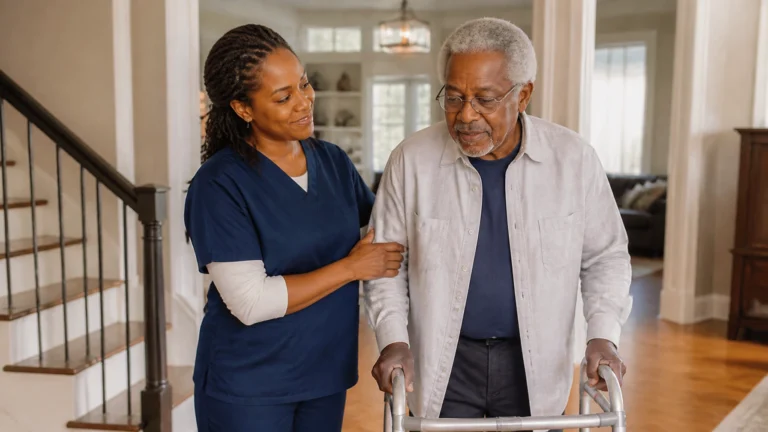
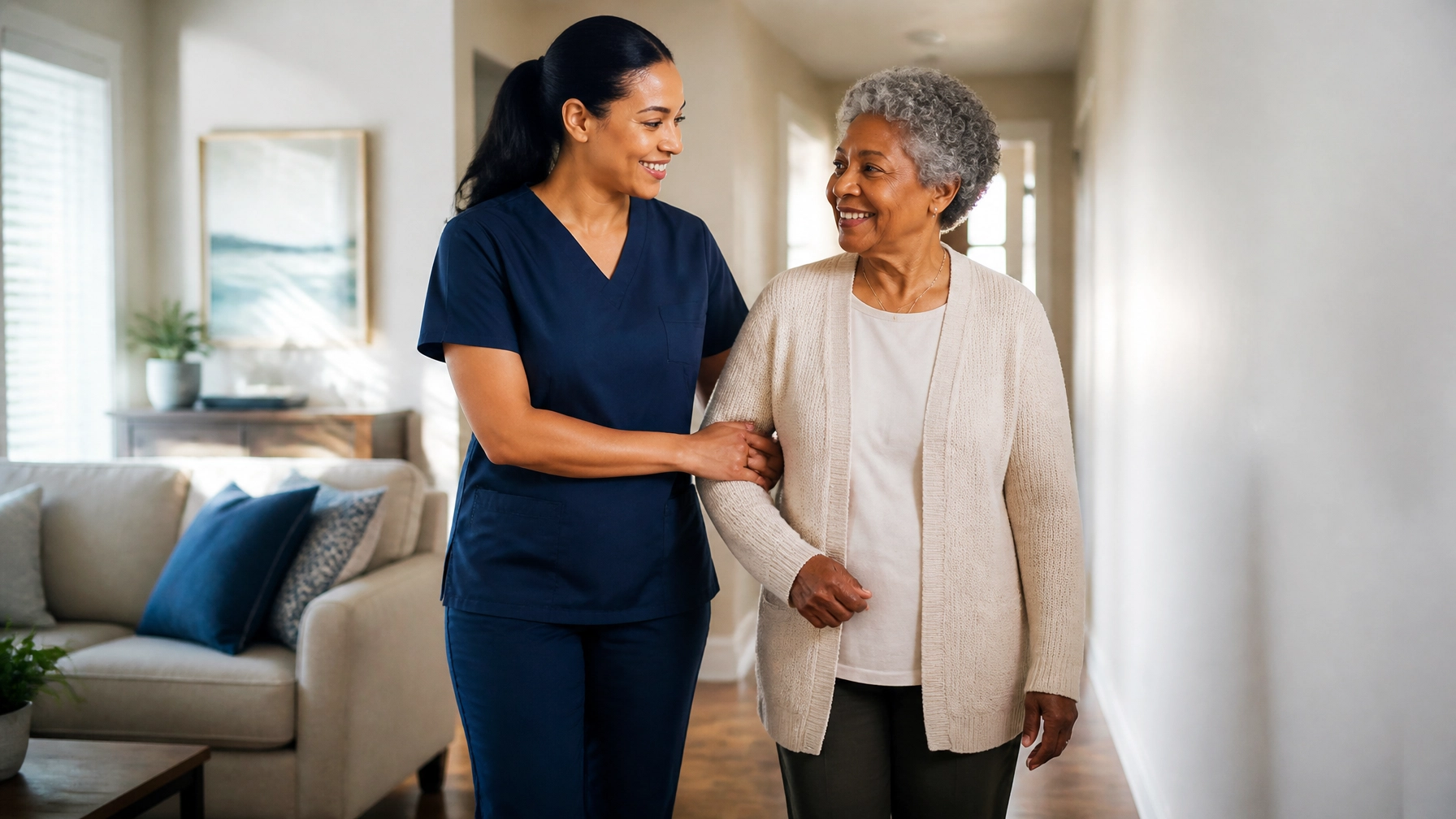
Our Companion Care and Daily Living Support teams focus on building confidence. By walking with our clients, encouraging light activity, and providing a steady arm, we help them maintain the strength needed to stay mobile.

Local Resources for Atlanta Families
In addition to professional home care, we encourage families to tap into the broad network of support available in Metro Atlanta:
- Empowerline: The Atlanta Area Agency on Aging network provides "A Matter of Balance" workshops that are excellent for seniors looking to build confidence.
- Georgia Falls Prevention Taskforce: This group offers resources and annual awareness events focused on making Georgia homes safer for seniors.
How to Get Started with Predictive Fall Prevention
If you are worried about a loved one's safety, don't wait for a "close call" to take action. The transition to proactive care can be simple and stress-free.
- Conduct a Walk-Through: Look at your parent's home through the lens of a "near-miss." Where have they stumbled lately?
- Review Medications: Some medications common for seniors in 2026 can cause orthostatic hypotension (a sudden drop in blood pressure when standing).
- Schedule a Consultation: Let's talk through your situation. We can provide a Safe Aging in Place Assessment to give you a clear roadmap.
At Elevare Home Care, LLC, we aren't just vendors; we are your partners in safety. Our goal is to provide the "thoughtful matching" and "consistent communication" that gives you peace of mind while your loved one enjoys their independence with dignity.
No pressure, just guidance. Whether you need Respite Care for a few hours a week or comprehensive Personal Care Assistance, we are here to help you navigate the future of senior safety in Atlanta.
Contact Elevare Home Care, LLC
Ready to move from reactive to proactive care? Let’s connect.
- Phone: 404-600-0090
- Office Address: 3500 Lenox Rd NE, Suite 1500, Atlanta, GA 30326
- Website: www.elevare-healthcare.com