Providing Home Care in Metro Atlanta and Surrounding Areas
Medical Alert Systems Vs. In-Home Caregivers: Which Is Better For Atlanta Seniors Living Alone?

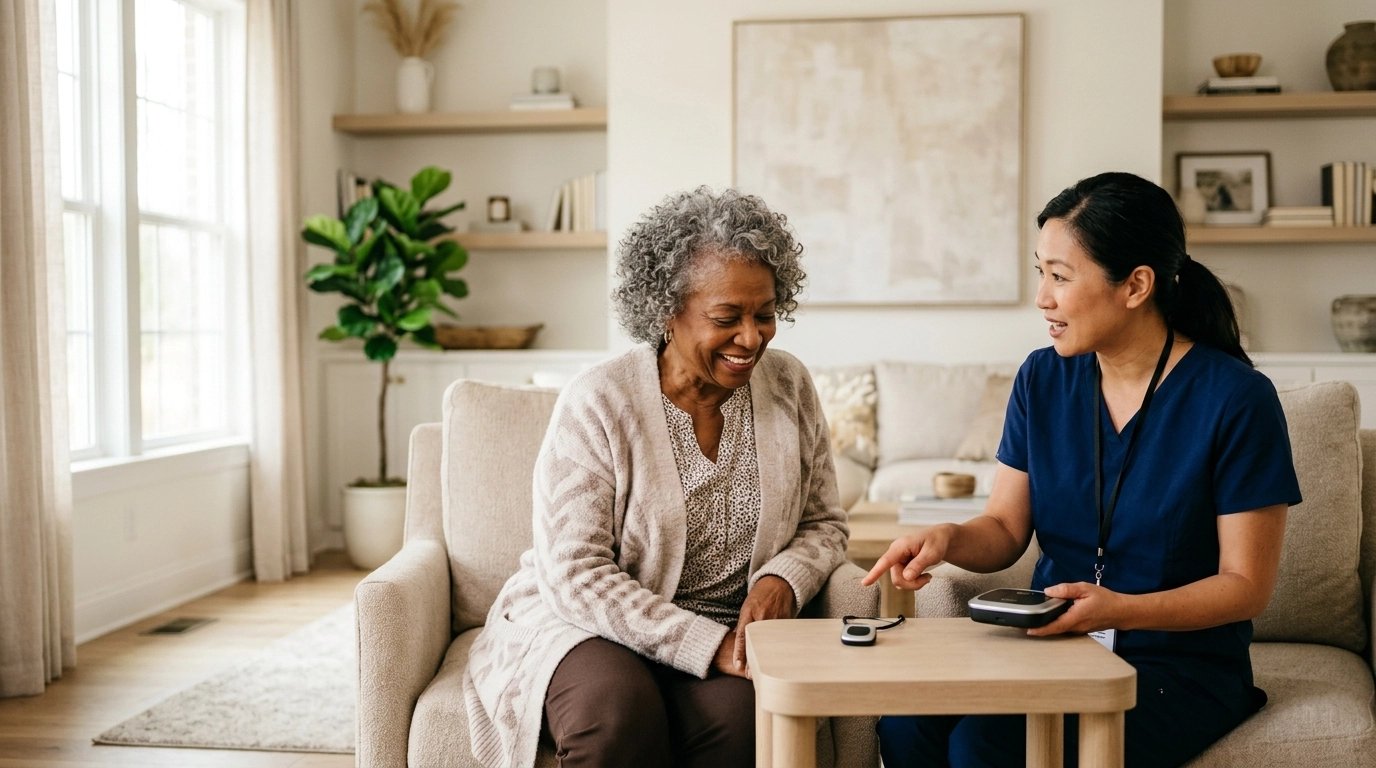
For many families in Metro Atlanta, the decision to ensure a loved one’s safety at home often starts with a single question: “What happens if they fall and I’m not there?”
As our parents and grandparents age, the desire to remain independent in their own homes is powerful. However, that independence often comes with a layer of anxiety for adult children, the “Sandwich Generation”, who are balancing their own careers and children while worrying about a senior living alone in Buckhead, Midtown, or Marietta.
To bridge this safety gap, two primary solutions often emerge: Medical Alert Systems and In-Home Caregivers.
While both options aim to provide security, they operate on fundamentally different philosophies. One is a reactive “safety net” designed for after a crisis occurs; the other is a proactive “safety guard” designed to prevent the crisis from happening in the first place.
In this guide, we will break down the pros, cons, and critical differences between medical alert devices and professional in-home care to help you decide which is the right partnership for your family.
Medical Alert Systems: The Reactive Safety Net
Medical alert systems, often referred to as Personal Emergency Response Systems (PERS), have been a staple of senior safety for decades. For families researching senior safety at home Atlanta options, these devices are often one of the first solutions that comes up. You likely recognize the “I’ve fallen and I can’t get up” buttons that seniors wear around their necks or wrists.
How They Work
These systems typically consist of a base station connected to a phone line (or cellular network) and a wearable button. When pressed, the button connects the senior to a 24/7 monitoring center. Some modern versions include GPS tracking and automatic fall detection, which uses sensors to “guess” if a fall has occurred.
The Benefits
- 24/7 Monitoring: Help is theoretically always available at the press of a button.
- Affordability: Monthly costs are generally low, typically ranging from $30 to $50 per month.
- Low Intrusiveness: For seniors who are highly independent and resistant to having someone in their home, a wearable device feels less like an “intrusion.”
The Limitations
Despite their popularity, research highlights significant gaps in these systems. According to recent studies, 37.7% of users found medical alert systems to be ineffective as a standalone intervention.
The primary reason? They are reactive. A medical alert system does nothing to improve a senior’s mobility, manage their medications, or remove the trip hazards in their hallway. Furthermore, 17% of seniors who fall end up waiting over an hour for help, even with access to emergency services, because the system relies on the senior being conscious, wearing the device, and the device functioning correctly.

In-Home Caregivers: The Proactive Safety Guard
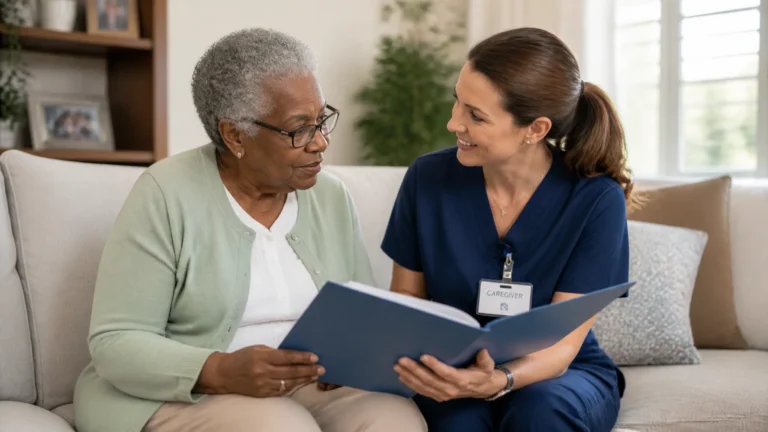
In-home care, such as the services we provide at Elevare Home Care, takes an entirely different approach. Instead of waiting for an emergency to happen, a professional caregiver works to anticipate and mitigate risks before they escalate.
Proactive Fall Prevention
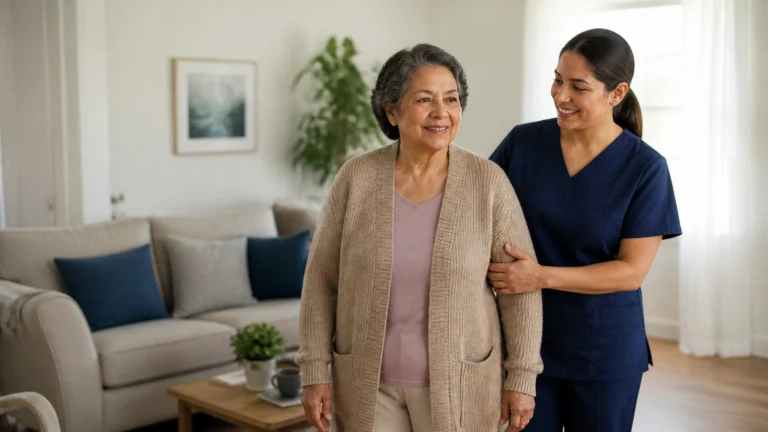
At Elevare, our approach is built on proactive fall prevention. For families comparing fall prevention home care Atlanta solutions, this difference matters. While a button can call for an ambulance after a hip fracture, a caregiver can help reduce the chance of that emergency happening at all by being physically present and ready to assist in real time. A real person can notice unsteady movement, step in during a transfer, and support safe routines in ways a device simply cannot. A caregiver can help prevent the fracture by:
- Assisting with transfers (getting in and out of bed or chairs).
- Providing steadying support during walks or trips to the bathroom.
- Identifying and removing environmental hazards like loose rugs or poor lighting.
- Ensuring proper nutrition and hydration, which are critical for maintaining balance and preventing dizzy spells.
Specialized Dementia-Informed Care
For seniors living with Alzheimer’s or other forms of dementia, a medical alert button is often insufficient. A senior with cognitive decline may forget to wear the device, forget how to use it, or become agitated by its presence.
Our caregivers provide dementia-informed support that focuses on safety supervision and routine. We understand how to manage “sundowning” and prevent wandering, risks that a simple wearable button cannot address.

Comparing the Two: A Side-by-Side Look
| Feature | Medical Alert System | In-Home Caregiver (Elevare) |
|---|---|---|
| Response Style | Reactive (After the fall) | Proactive (Before the fall) |
| Human Connection | None (Voice over a speaker) | High (Friendly companionship) |
| ADL Support | No help with bathing/dressing | Full assistance with daily living |
| Medication Management | Basic reminders only | Observation and adherence support |
| Safety Monitoring | Passive (Waiting for a signal) | Active (Physical supervision) |
| Nutrition | No impact | Meal preparation and hydration |
Why “A Button” Is Often Not Enough
While a medical alert system provides a basic safety net, it cannot replace the human element of care. For many Atlanta seniors living alone, the greatest risks aren’t just sudden falls, but the slow decline of health caused by isolation and neglected self-care.
A medical alert device can connect someone to help after an emergency. A caregiver can be there before, during, and after a difficult moment. That real-time presence matters. If a senior becomes dizzy, confused, weak during a transfer, or disoriented in the middle of the night, a real person can respond immediately with hands-on support, reassurance, and judgment. A device cannot help someone stand safely, notice a change in breathing, calm anxiety, or see that something feels “off” before it turns into a crisis.
The Role of Companionship
Loneliness and social isolation are linked to serious health conditions, including heart disease and cognitive decline. A medical alert system doesn’t provide “emotional support” or “friendly conversation.”
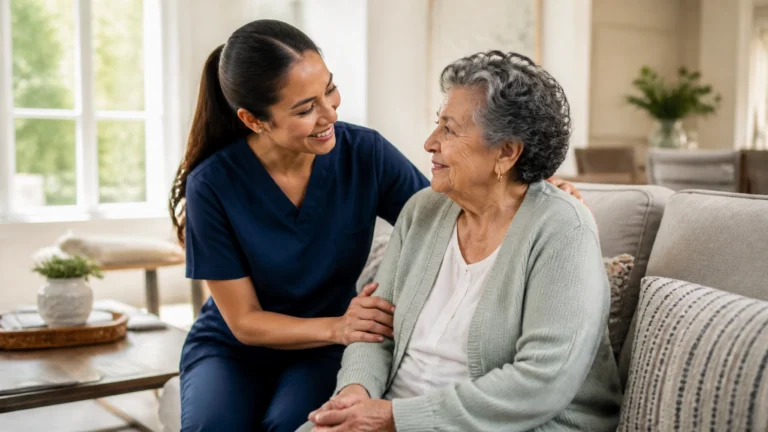
An Elevare caregiver becomes a trusted partner, providing the social engagement that keeps a senior’s mind sharp and their spirits high. This companionship often leads to better health outcomes because the caregiver notices small changes in mood or physical ability that a remote monitoring center would miss.
Medication and Nutrition
A significant percentage of senior hospitalizations in Metro Atlanta are due to medication errors or malnutrition. A button cannot ensure that a senior has taken their blood pressure medication or eaten a balanced meal. Our caregivers provide daily living support, including meal prep and medication reminders, which directly reduces the likelihood of an emergency occurring.

Making the Choice: A Decision Checklist for Families
If you are trying to decide between these two options for your loved one in Atlanta, consider the following questions:
- Has your loved one fallen in the last 6 months? If yes, a medical alert system is likely not enough. They need physical assistance to prevent future falls.
- Are they showing signs of memory loss? If they are beginning to forget appointments or get confused by household appliances, they need specialized care support rather than a digital device.
- Are they eating regularly and maintaining their hygiene? If you notice the fridge is empty or their grooming has declined, they require the daily living support of a caregiver.
- Do they spend most of their day alone? If isolation is a concern, companionship care can significantly improve their quality of life.
For many families, the answer is a hybrid approach. A medical alert system can provide a sense of security during the overnight hours, while an Elevare caregiver provides proactive, hands-on support during the day. If your family is evaluating 24 hour home care cost Atlanta options, it may help to compare that investment against the value of continuous supervision, fall prevention, overnight awareness, and the peace of mind that comes with having a real person there.
The Elevare Difference: Partnership and Peace of Mind
Choosing how to protect a loved one is a heavy responsibility. At Elevare Home Care, we don’t just see ourselves as a “service provider”: we are a collaborative ally to your family.
Our goal is to enhance independence, not take it away. By providing thoughtful caregiver matching and transparent communication, we ensure that you are always in the loop regarding your loved one’s well-being. Whether you need a few hours of respite care or 24/7 safety supervision, we tailor our approach to your specific situation.
Let’s Talk Through Your Situation
There is no pressure to make a decision today. We understand that every family’s needs are unique. If you’re unsure if your loved one is safe at home, let’s have a conversation. We can help you identify the signs that it might be time for more support and help you build a plan that prioritizes dignity and safety.
Contact Elevare Home Care, LLC
3500 Lenox Rd NE, Suite 1500
Atlanta, GA 30326
Phone: 404-600-0090
Website: www.elevare-healthcare.com
Serving Metro Atlanta with proactive, dementia-informed, and compassionate in-home care.